Metopo journal
How a dry-stone wall stands up
A
AstroBaaS 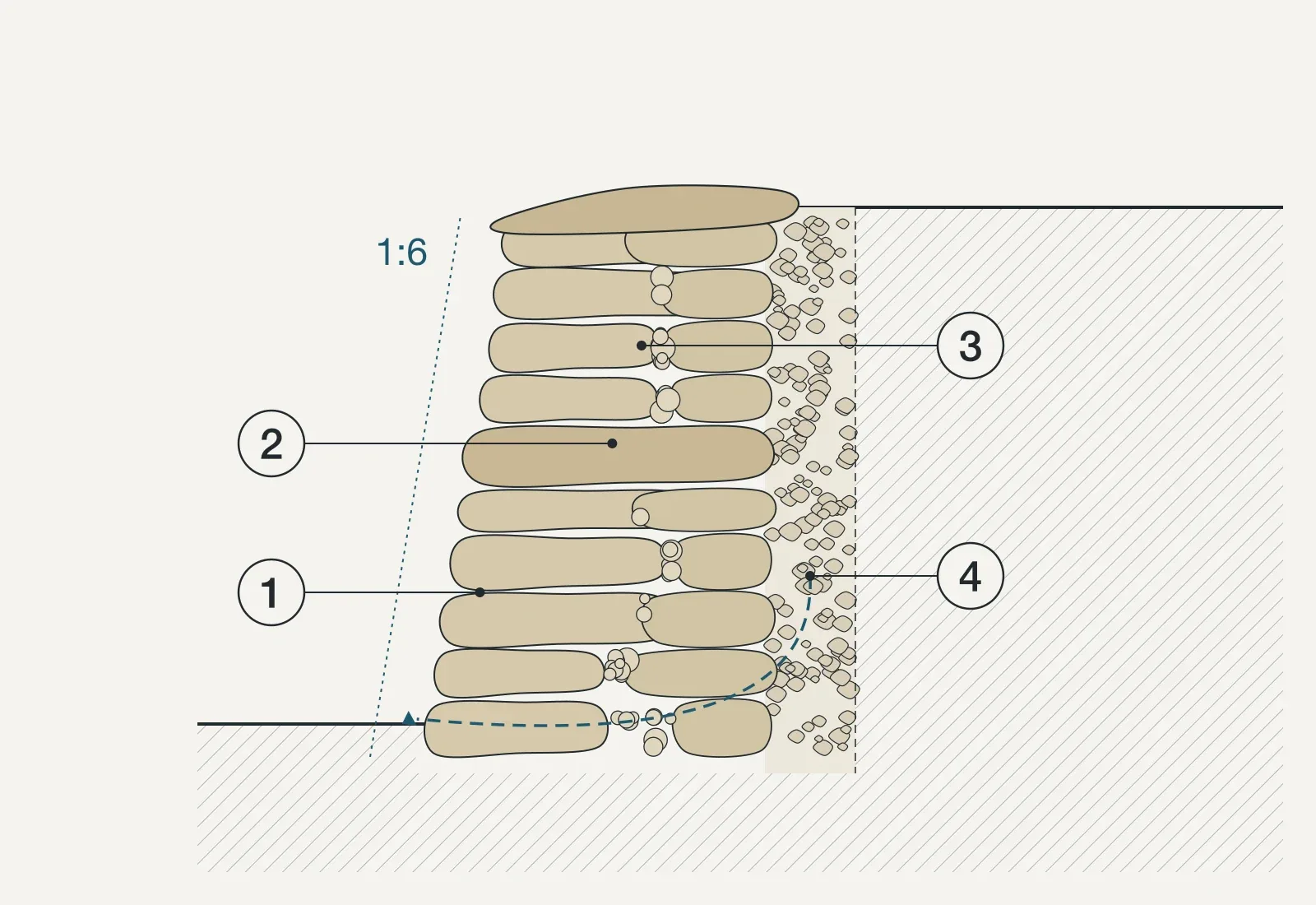
A dry-stone wall looks like a pile of stones. It is a precise structure, and the masons of Anopoli, Kostis and Manousos, taught us how it works over four summers.
Four things hold it up
- The face leans back into the hill, about one in six. The weight of the wall pushes into the slope instead of away from it.
- Long stones, called through-stones, run from the face deep into the wall every metre or so and tie it together.
- The heart of the wall is packed with small stones, so the face stones cannot rock.
- Behind the wall, a layer of broken stone lets the water run down and out at the foot. The soil stays where it is.
The walls that fell at Anopoli had nearly all been repaired with cement in the 1970s. The cement stopped the water; after a wet winter the pressure behind them grew until they burst. The dry walls beside them, a hundred years older, were fine.
We rebuilt 1.2 kilometres in the old way. The masons wrote the method down with us, and the village gives the booklet to anyone who asks.